
Evaluating the engineering divergence between presentation gift packaging and industrial shipping cartons reveals distinct material selections, internal cushioning strategies, and compressive load capacities tailored to their operating environments. Presentation gift boxes utilize premium rigid greyboard wrapped in coated art paper, virgin kraft substrates, or lightweight 3-layer E-flute architectures. Internal product security in gift boxes relies on custom-molded plant fiber pulp trays or food-grade thermoformed inserts engineered for single-fruit isolation, preventing contact abrasion between delicate skins. Compressive resistance is calibrated for horizontal retail shelf display and light secondary stacking. In contrast, heavy-duty export shipping containers employ reinforced single-wall boards or heavy-duty double-wall BC-flute corrugated structures engineered for high edge crush resistance (ECT) and elevated box compression ratings (BCT). Internal isolation within export cartons utilizes interlocking corrugated partition grids or multi-layer paper pulp trays capable of stabilizing bulk fruit loads across seven to nine stacked pallet tiers under dynamic transit forces.
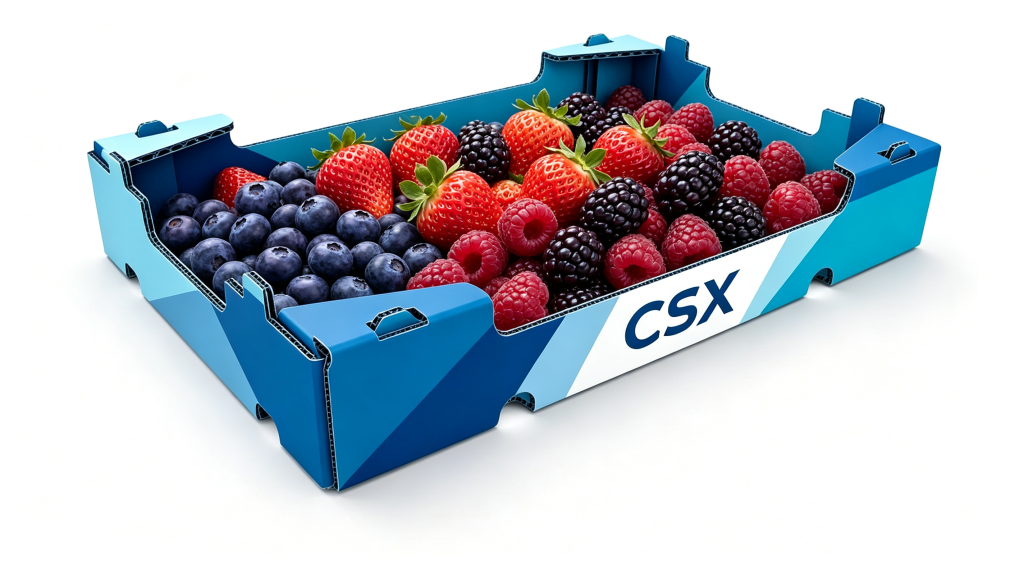
Surface chemistry, atmospheric defense mechanisms, and inbound supply chain staging further illustrate the operational specialization of each packaging category. Decorative presentation boxes incorporate surface matte or gloss barrier lamination to deflect ambient moisture while providing an optimal receptive surface for multi-color CMYK offset printing, selective spot UV varnishing, and tactile foil stamping. Consumer convenience is addressed through integrated ribbon pulls, braided cord handles, or fold-up die-cut carrying handles. Conversely, export shipping cartons prioritize rigorous environmental barrier chemistry to survive two to four weeks of 90% to 95% relative humidity inside maritime refrigerated containers. Export containers integrate water-resistant bonding adhesives and food-grade paraffin or water-based barrier coatings that prevent moisture-induced fiber softening. Graphics on export cartons utilize functional flexographic printing with food-safe, odorless soy inks to display traceability barcodes and handling pictograms. From an inbound logistics perspective, export cartons ship in high-density knockdown flat-packed bundles to optimize warehouse staging capacity, whereas rigid gift boxes require dedicated assembly time and staging space.

This technical divergence underscores that selecting between presentation gift boxes and export shipping cartons represents a functional division of labor rather than a direct substitution. Capital allocated toward gift packaging generates commercial returns through retail shelf conversion, brand loyalty, and premium seasonal gift pricing. Conversely, capital invested in heavy-duty export shipping cartons protects harvest asset value by preserving container structural integrity through challenging maritime transit corridors, preventing carton collapse, mitigating transit rot, and maintaining commercial integrity with overseas fruit importers.